3 READ-TIME
Make The Most of Your On-Farm Seed Treatment Investment
April 6, 2021
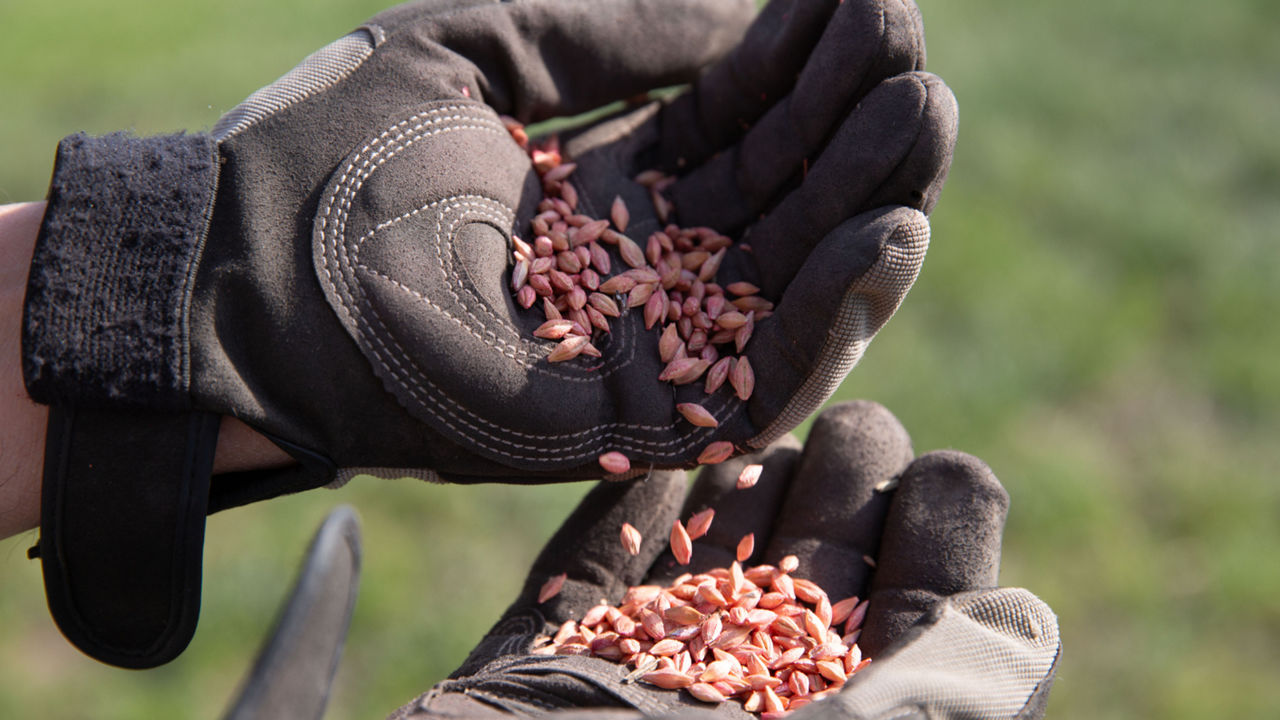
Seeding season is almost upon us and if you’re treating your cereal seed on-farm, here are a few tips to ensure an accurate application rate and good coverage. These steps will take a little more time and attention in a busy season. Chances are you’ll be glad you followed this advice come harvest time.
Calibrate your seed treatment equipment for even coverage.
Before you begin, check the product label to make sure you’re using the correct application rate of your chosen seed treatment. In the case of Raxil® PRO, the recommended rate is 325 mL/100 kg of seed. Make sure your treating equipment is calibrated properly both for seed and seed treatment flow. Calibrating for weight rather than volume results in more even seed coverage.
Mix your seed treatment thoroughly prior to application
If you purchased a Raxil PRO seed treatment tote (Bayer now offers a 125-litre, bottom-drain drum), be sure to mix the product evenly and thoroughly. Using a standard electric drill, run it at half speed for two minutes. If you have a recirculating pump on the farm, run that for two minutes. For more detail on how to get the most from your on-farm seed treatment, check out Seed Treating Best Practices at: https://www.cropscience.bayer.ca/articles/2021/seed-treating-best-practices
Adding an insecticide to your Raxil PRO seed treatment
Stress Shield® seed treatment insecticide from Bayer provides systemic and contact activity to protect spring wheat, winter wheat, barley, oats, edible beans, peas and soybeans. Stress Shield acts quickly to prevent early season damage from harmful pests such as European chafer, Japanese beetle, bean leaf beetle, wireworm and seed corn maggot. You’ll also get the longest residual control of aphids available from a seed treatment. The large Raxil PRO totes have room to add Stress Shield® - all in the same container. To mix it in, use a recirculating pump and run for eight minutes.
Start with seed and seed treatment at room temperature
The temperature of the seed itself is one of the most important factors required for effective coverage and control. If it can be warmed up prior to treating it will help the seed treatment adhere to the seed and ensure good coverage. seed treatment should also be warm. Cooler product tends to be thicker, so it won’t mix as well or stick to the seed as readily. Keeping seed treatments in a warm space prior to treating will lead to the best outcome, despite the cooler weather outside.
Monitor seed treatment coverage during application
As you treat, check often to ensure you’re getting even seed coverage. This is particularly important for naturally dusty crops like rye, triticale and barley. If coverage appears uneven, try slowing down the treatment equipment so secondary mixing has more time to treat bare seed.
In fact, secondary mixing, the process by which treated seed mixes with untreated seed after initial application, is critical for complete coverage on the seed. An auger or any screw-type mixing device can be used for secondary mixing. When using an auger, it’s best to run the auger at a maximum of two-thirds full. A full auger does not allow seed to mix quickly enough as seed moves up the auger. Check seed coverage frequently and adjust auger speed accordingly. Also, watch for dust buildup on equipment and keep filters clear.
Storing your treated seed
Store treated seed in a cool, dry place. You can use it again the following season if it’s been stored properly. If you’re using stored seed, it's always a good idea to have it tested prior to seeding in order to check quality indicators like germination, vigour, 1,000 kernel weight and more.
To ensure your treated seed does not contaminate harvested grain, be sure to store treated seed in a separate, clean bin. Clean all equipment and bins after seeding and before harvest as well as before moving grain between bins. If your harvested grain is contaminated with treated seed or seed treatment residue, you could be docked at the elevator.
And remember, if you need technical support, seed testing, application tips or advice, just call 1-855-716-2596 to speak to a Bayer representative.
For further information about successful cereal seed treatment
For more information on seed treatment best practices and products like Raxil® PRO and Stress Shield®, contact your local Bayer representative by calling 1-855-716-2596.
Invest in the best for your crops with reliable and innovative solutions from Bayer.
References
“Prevent Treated Seed Contamination” Top Crop Manager West, https://www.topcropmanager.com/prevent-treated-seed-contamination-14157/