Making the Right Call: Understanding Insecticide Options and Economic Thresholds in Potatoes
June 3, 2026
Insect pressure in Canadian potato production is becoming increasingly difficult to predict, forcing growers to make more precise decisions around insecticide use, timing and resistance management. Across the major potato-producing regions in Canada, growers are facing evolving pest dynamics, rising resistance concerns and tighter economic margins.
The challenge is no longer simply whether to spray, but when, how and with what chemistry.
“The answer changes depending on the pest,” said Justin Dalebozik, Bayer Fruit and Vegetables Sales Agronomist with Bayer Crop Science. “Colorado potato beetle (CPB) pressure has generally increased due to rising resistance and reduced sensitivity along with some behavioural adaptations.”
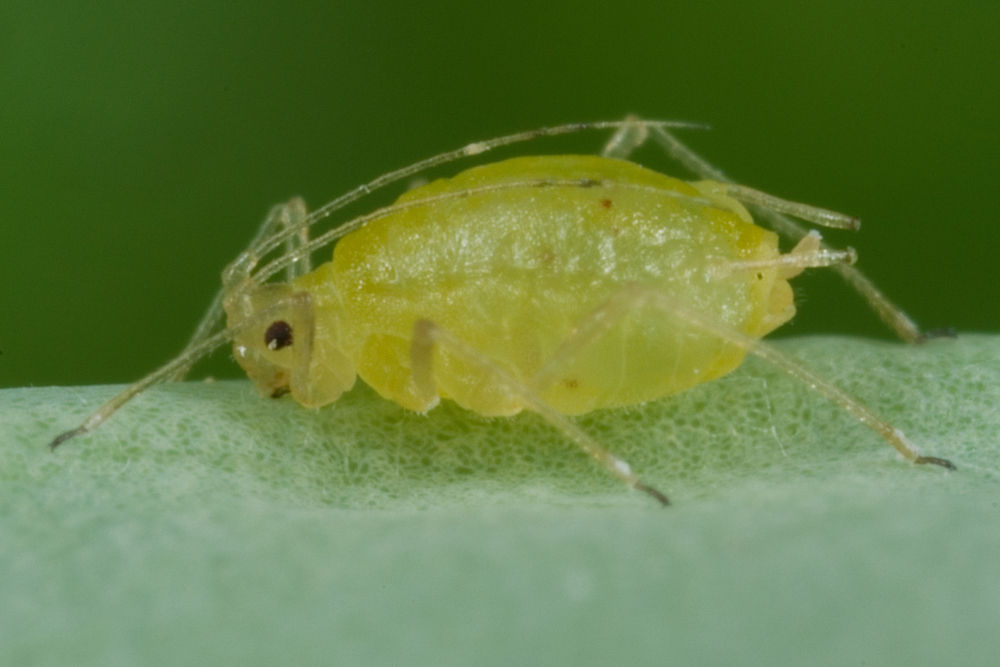
CPB remains the industry’s most persistent insect challenge, but aphids — especially due to their role in Potato virus Y (PVY) transmission — are also becoming increasingly important in seed production systems. Potato flea beetles and European corn borer (ECB) are adding further complexity in some regions.
Ryan Barrett, Research & Agronomy Specialist with the Prince Edward Island Potato Board, said resistance trends are changing how thresholds and management programs are viewed.
“We have been able to document insecticide resistance in both CPB and green peach aphids, and there has been Bt [Bacillus thuringiensis] resistant populations of European corn borer identified in the region in the past few years,” he said. “For CPB, seed-applied neonics are providing a shorter window of efficacy.”
Different pests, different pressures
Each major potato insect pest behaves differently, meaning management decisions cannot rely on a one-size-fits-all approach.
CPB causes direct defoliation damage and has demonstrated remarkable adaptability to insecticides over decades. Aphids, meanwhile, may cause relatively little feeding injury but pose a major virus transmission risk, particularly in seed potato systems. Flea beetles can damage emerging plants and tubers, while European corn borer pressure has intensified in some eastern production regions.
“Aphids are more of a pest on seed acres,” Dalebozik explained. “Processors are not as concerned as long as tuber quality is not affected. So, the threshold is lower in seed versus processing.”
Tyler MacKenzie, Research and Development Coordinator with Agricultural Certification Services, Potatoes New Brunswick, said aphid management in seed potatoes differs fundamentally from traditional threshold-based insect control.
“Even relatively small numbers of aphids can create significant problems if they introduce virus into a seed field,” he said. “In seed potato production, aphids are often more important as vectors of PVY than as feeding insects themselves.”
Because PVY transmission occurs rapidly during aphid probing activity, insecticide applications often focus more on reducing transmission risk during key windows than reacting to visible aphid populations.
Understanding insecticide categories
Choosing the correct insecticide depends on pest biology, crop stage and resistance considerations.
“Contact insecticides stay on the surface, are fast acting and require very good coverage to be effective,” said Dalebozik. “Systemic insecticides move throughout the vascular system which provides longer term protection. And insecticides with translaminar activity penetrate the leaf but stay somewhat localized which helps control pests that tend to hang out on the underside of leaves.”
Sherri Tedford, Bayer Customer Solutions Agronomist, Fruit and Vegetables, added that translaminar and systemic activity can be especially important for aphid control.
“You would want something with translaminar activity for pests that feed or hide on the underside of leaves,” she said. “Systemic products also work for this — if it’s a pest that will move around on the plant including hard to reach areas, a systemic gives greater efficacy.”
Mode of action (MoA) rotation remains central to resistance management. CPB in particular has developed resistance to numerous chemistries across North America.
“This is the single most important thing growers should be doing when it comes to CPB control,” Dalebozik said regarding MoA rotation. “We only have so many options in the marketplace and it seems like CPB are adapting faster than we can launch new solutions.”
“Outside of the low-pressure areas I don’t think many rely on older chemistries such as pyrethroids for control of CPB,” Dalebozik said. “Resistance to pyrethroids is common and widespread throughout Canada.”
Bayer’s potato insect management portfolio reflects the range of approaches now required in potato systems. Older products such as Admire® and Decis® insecticides remain available in certain situations, while newer chemistries such as vayego® insecticide offer targeted activity against CPB and other pests. Products such as Sivanto® Prime and Movento® insecticides are positioned for aphid and psyllid management, while Emesto® Complete seed-piece treatment combines fungicide and insecticide protection at planting.
Tedford noted that newer modes of action often improve both stewardship and selectivity.
“Newer MoAs tend to offer good efficacy while having fewer off-target effects,” she said.
Economic thresholds remain essential — and complicated
With insecticide resistance pressures mounting, economic thresholds are increasingly important decision tools. However, defining those thresholds is not always straightforward.
“We don’t have any great thresholds,” said Tracy Shinners-Carnelley, Vice President, Research and Quality with Peak of the Market in Manitoba. “For as common a pest as CPB is, there isn’t one real threshold that people can use and lean on.”
Historically, CPB thresholds were developed around older potato varieties such as Russet Burbank, but today’s potato varieties differ significantly in canopy structure, maturity and stress tolerance.
“Potato plants can tolerate a lot more feeding damage than what we can tolerate to watch happen,” Shinners-Carnelley said.
Despite the challenges, industry experts continue to stress that sprays should be triggered by scouting and pest pressure — not calendar schedules.
“The calendar is a good indicator on when to scout but not when to spray,” Dalebozik said.
Tedford adds calendar-based spraying often persists simply because it feels easier during busy growing seasons.
“Spraying when it’s not really necessary can cost extra money in spray material, water, fuel and, sadly, promote pest resistance,” she said.
Thresholds also vary dramatically depending on production goals. In seed potato systems, aphid thresholds are effectively much lower because virus transmission risk outweighs feeding damage concerns.
“We really do not suggest growers wait for specific thresholds to trigger an insecticidal response,” MacKenzie said. “The growers already have a weekly insecticide and mineral oil spray program.”
Mineral oils have become a foundational component of PVY management because they interfere with virus transmission itself rather than simply targeting aphids.
“Mineral oils are important because they target the virus transmission process itself,” MacKenzie said. “In our field trials, insecticide-only treatments were consistently less effective than programs combining mineral oil with insecticides.”
Scouting drives better decisions
Effective scouting remains the foundation of successful insect management programs.
Growers are increasingly encouraged to monitor pest life stages, local weather conditions, neighbouring field activity and regional monitoring networks rather than relying solely on fixed spray intervals.
“This situation is really focused on scouting, and better understanding of what is actually happening in the field and in the neighbourhood where your potatoes are,” said Shinners-Carnelley.
Barrett said regional monitoring tools are becoming more important as pest dynamics shift.
“Degree day models for CPB and ECB can be useful to warn scouts of when they should be on the lookout for these pests,” he said, adding that trap data for aphids is “widely used.”
In New Brunswick and Prince Edward Island, Aphid Alert networks track aphid abundance and species movement throughout the season, helping growers better anticipate periods of elevated PVY risk.
MacKenzie emphasized that species identification also matters.
“Some aphids colonize potato plants and establish populations within the field, while others are primarily transient migrants that briefly land, probe plants, and move on,” he said.
Scouting challenges remain significant, particularly on large commercial farms.
“Weather and labour are the two that come to mind,” Dalebozik said. “If it is too wet to get into the field, scouting becomes very challenging. And it takes time to effectively scout fields.”
Still, experts argue that improved scouting ultimately saves money by improving spray timing and preserving insecticide efficacy.
“Good practices today will save you more tomorrow,” Dalebozik said.
Precision over routine
Industry specialists increasingly agree that successful potato insect management depends on integrating multiple tools rather than relying on repeated foliar sprays alone.
Seed treatments can provide valuable early-season protection and delay the need for foliar applications. Foliar insecticides must then be matched carefully to pest pressure, life stage and resistance risk.
“This leads then into the importance of scouting… monitoring a field after it emerges, better understanding what type of control you’re actually getting with that seed treatment, and figuring out when is the appropriate timing for foliar application if and when it’s actually needed,” said Shinners-Carnelley.
As resistance pressure continues to intensify, growers are being encouraged to think more strategically about every insecticide application — protecting both yield potential and the long-term viability of available chemistries.
The message from agronomists and researchers across Canada is increasingly consistent: the most effective insect management programs are built on correct product selection, strong scouting, mode-of-action rotation and threshold-based decision-making rather than routine spraying.
ALWAYS READ AND FOLLOW PESTICIDE LABEL DIRECTIONS. Admire®, Bayer, Bayer Cross, Decis®, Emesto®, Movento®, Sivanto® and Vayego® are registered trademarks of Bayer Group. Used under license. Bayer CropScience Inc. is a member of CropLife Canada. ©2026 Bayer Group. All rights reserved.