
Management of Corn Rootworm Complex in Eastern Canada
February 25, 2026

General Description and Biology of the Corn Rootworm Complex
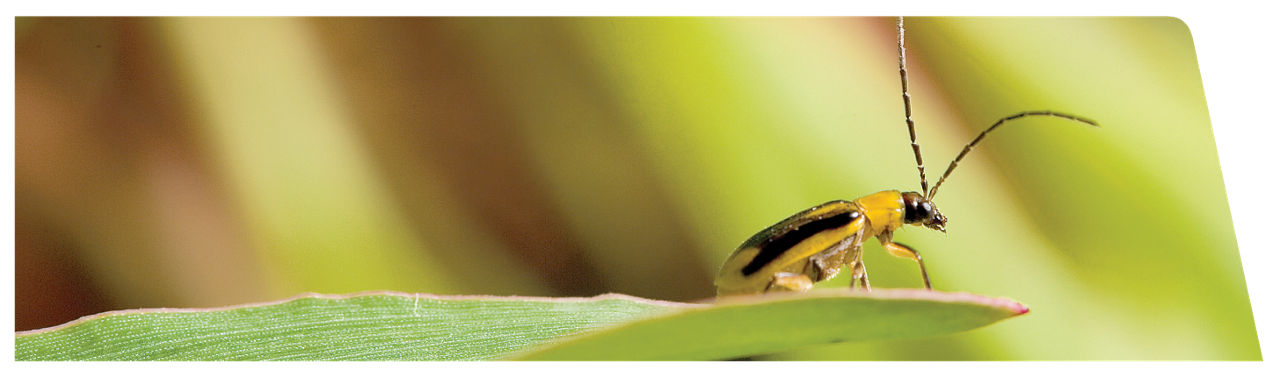
The corn rootworm complex in Eastern Canada is considered the most economically damaging insect complex in corn; however, it can be managed eff ectively by applying integrated pest management concepts. The complex in Eastern Canada consists of two species, the Western corn rootworm (WCR) and the Northern corn rootworm (NCR).
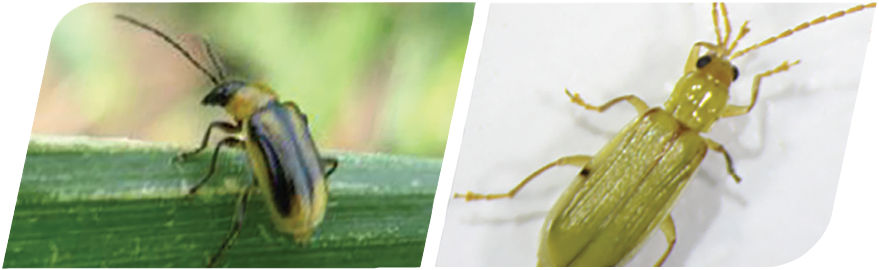
The biology of the WCR and NCR is very similar. They produce a single generation per year and overwinter in the egg stage. Egg hatch begins in the late spring and half of the eggs hatch after approximately 680 to 750 soil-based degree days using a base temperature of 10°C. This usually occurs in late May to late June.
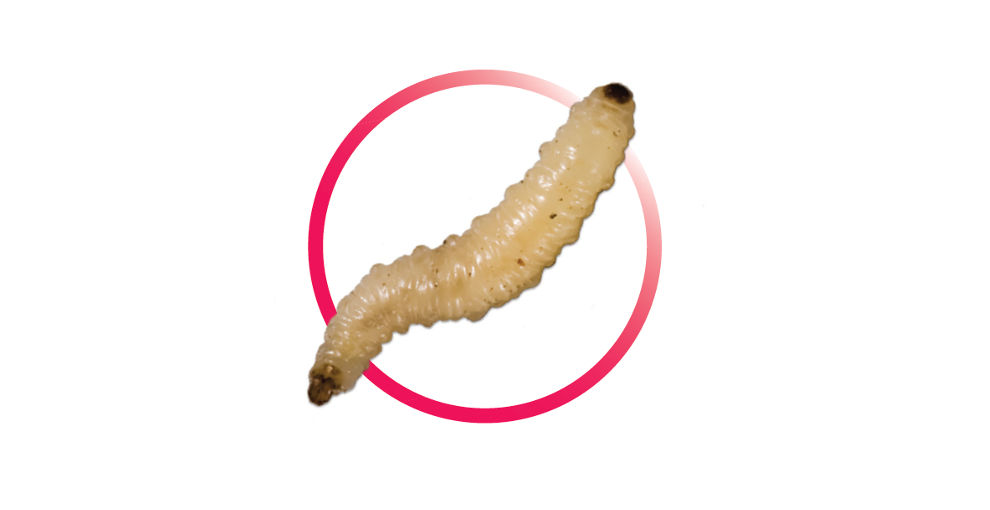
The larvae (Figure 2) go through three growth stages, with the entire larval stage lasting about 30 days. Adult beetles usually emerge between late July to the end of September. After mating, females deposit eggs in the soil, with most of the eggs deposited in the upper 30 cm of soil in August. WCR females can lay over 1,000 eggs and NCR approximately 300 eggs.
Injury to Corn
Corn rootworm (CRW) larvae are attracted to corn roots and can travel up to 1 metre through the soil to get to them. Larvae start by feeding on the root hairs but as they continue growing, they start feeding on the root tips, killing the growing point which causes the roots to stop elongating. Larvae continue feeding until they reach the pupation stage, which occurs in late July in Ontario.
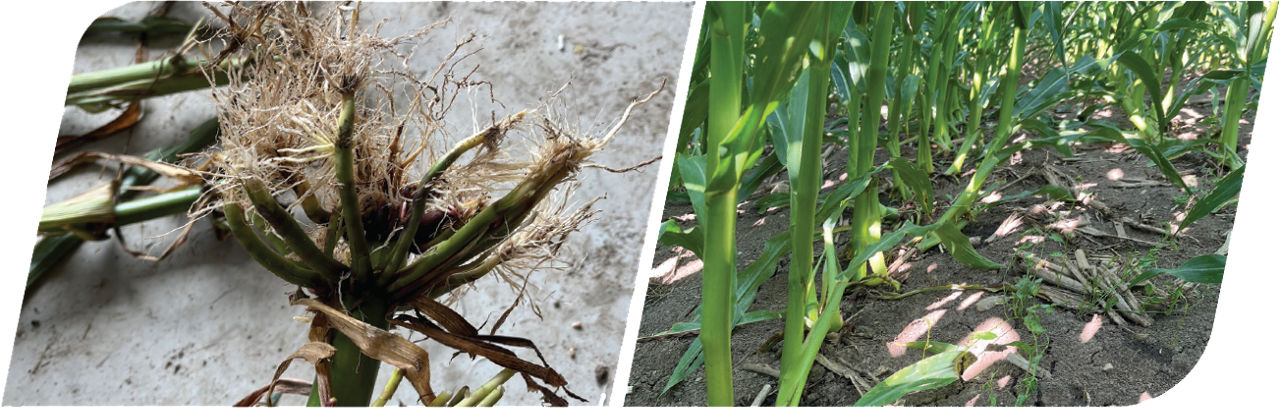
Extensive root feeding can cause corn plants to lodge due to a lack of root system (Figure 3).
Adult CRW beetles feed on corn leaves, silk and pollen. In severe cases, they can prune back the silks to the point that it interferes with pollination, causing empty or partially filled ears.
Scouting/Management
Management of Larval Injury by Sampling Adults
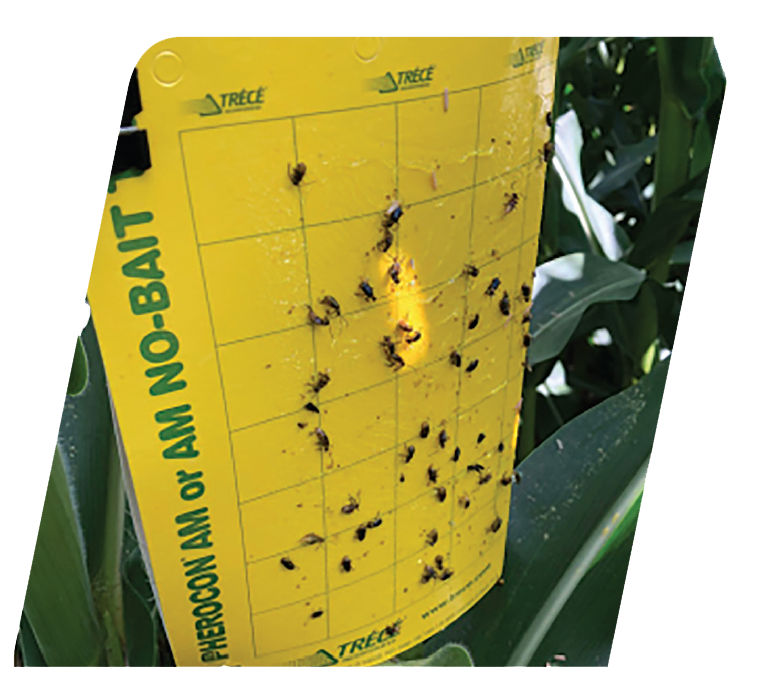
Managing potential injury caused by the larval stage begins with monitoring the adult activity during late July through August of the previous year. Counting adults in corn fi elds, either on plants or captured on sticky traps, can provide an indication of the risk of larval damage the following year. The use of sticky traps is becoming the standard method of assessing the risk of injury.
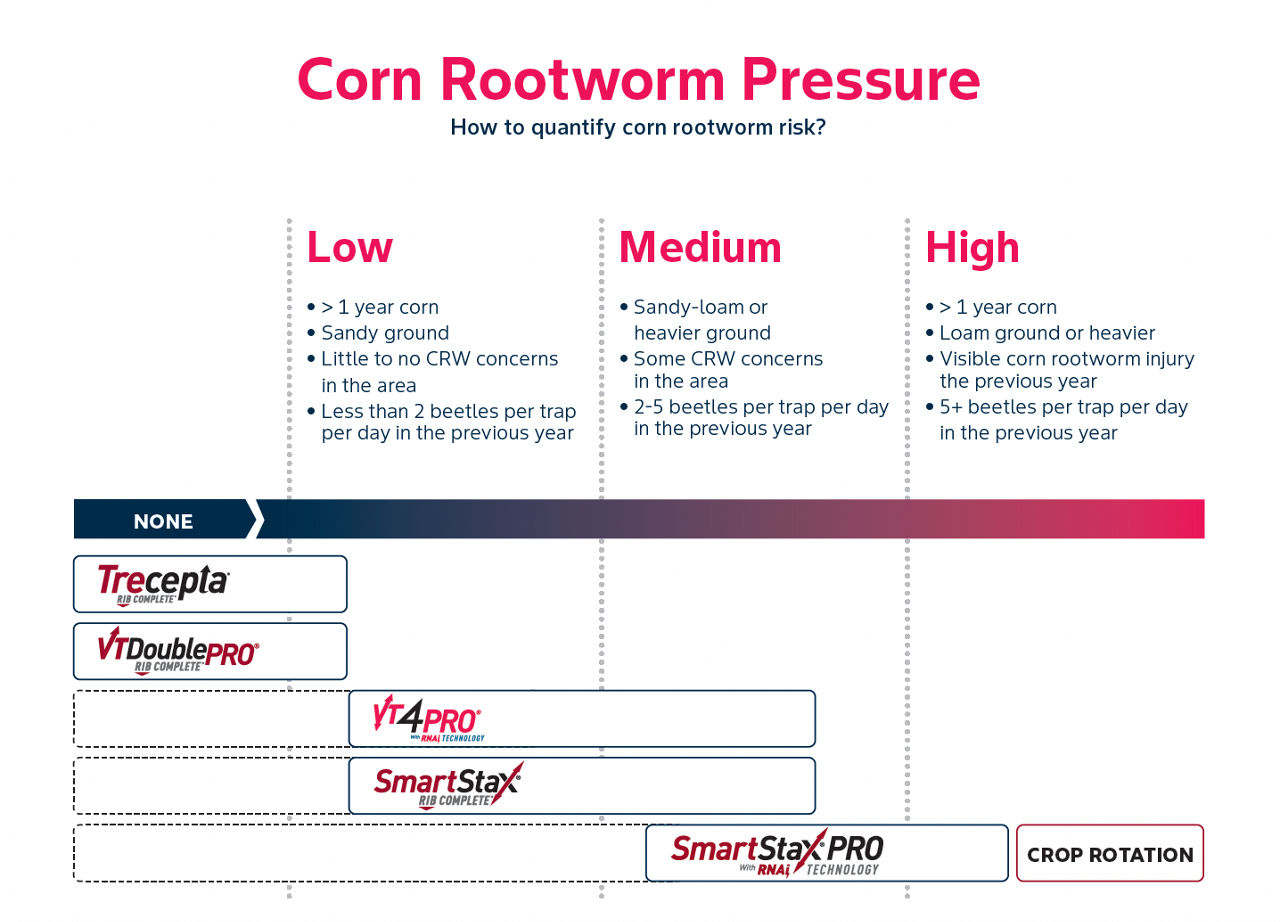
Four sticky traps can be set up per field from mid July through August. Traps need to be counted and changed weekly. Determine the number of beetles caught per trap per day. If at any time during the sampling period the number of beetles exceeds an average of two beetles per trap per day, a control tactic is recommended for the next growing season. High trap numbers could also indicate that the population is developing resistance to Bt1. The trapping period should last at least six weeks.
Management Tactics if Beetle Counts Exceed the Threshold
Management tactics include:
Crop rotation to a non-corn crop
- Corn is the only agronomic crop in which the corn rootworm complex can complete its life cycle. If beetle counts exceed the threshold, rotating to a non-corn crop is the most effective known control. In areas where CRW populations are high, rotation away from corn for two years is ideal.
Corn product selection that contains pyramided below-ground corn rootworm protection trait
- A pyramided corn product is one that has been genetically modified to produce at least two proteins directed towards a single pest. For products containing SmartStax® technology, there are two Bacillus thuringiensis (Bt) proteins (Cry34/35Ab1 and Cry3Bb1) that are active against corn rootworm larvae. For products containing SmartStax PRO with RNAi Technology, there is an additional mode of action from DvSnf7 dsRNA. For products containing VT4PRO® with RNAi Technology, there is one Bt protein (Cry3Bb1) and the additional mode of action of DvSnf7 dsRNA
Insecticides
- Insecticides can be applied at planting prior to egg hatch to suppress economic injury by the corn rootworm larvae. This should only be done on non-rootworm traited corn. Consult your local extension office for local recommendations.
- There currently are no insecticides registered for control of CRW beetles later in crop in Eastern Canada.
Corn Rootworm Pressure
How to quantify corn rootworm risk?
Resistance to Bacillus thuringiensis (Bt)
Prior to 2019, there were isolated cases of CRW resistance in fields where a hybrid with a single Bt trait was planted for more than 3 consecutive years without rotation (to other crops or Bt proteins).
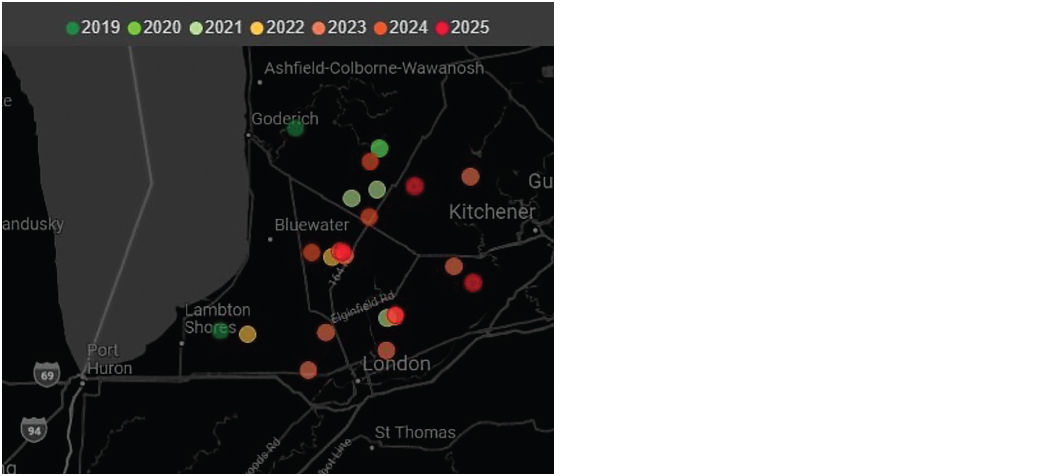
Since 2019, there have been reports of CRW injury in pyramided hybrids across multiple counties in Ontario, suggesting that CRW populations have developed resistance to multiple Bt proteins.
Bt proteins with confirmed resistance in Ontario and/or the US include:
- Cry3Bb1, Cry34/35Ab1, mCry3A and eCry3.1Ab
Figure 6 maps locations where there has been CRW injury in corn with Bt proteins reported to Bayer. Based on the injury in corn and previous resistance testing done at the University of Guelph, it’s suspected that the majority of the CRW populations in these areas could have developed resistance to some Bt proteins. If you farm in areas with spots highlighted on the map, it’s important that you scout your fields for CRW beetles and make management decisions based on the assumption that the CRW populations could have developed some level of resistance to Bt proteins. The most effective option is to rotate fields to a non host crop.
If you farm outside of the depicted areas, it’s still important to scout your fields for CRW beetles and implement management tactics to help avoid CRW becoming a problem on your farm.
Continuous corn is one of the biggest risk factors for having problems with CRW in corn3. In areas with a high concentration of continuous corn acres, it’s important to implement best management practices to decrease CRW populations and reduce the chance of the populations developing resistance to the Bt proteins.
Sources:
- Canadian Corn Pest Coalition. 2025. Corn Rootworm. www.cornpest.ca/corn-pest/corn-rootworm/
- Seiter, N., Spencer, J., and Estes, K. 2018. Managing corn rootworm populations in Illinois: Considerations for 2018. farmdoc. University of Illinois Extension. https://farmdoc.illinois.edu/field-crop-production/insects/managing-corn-rootworm-populations-in-illinois-considerations-for-2018.html/.
- Manage Resistance Now. 2025. Managing Corn Rootworm Resistance to Bt Corn in Continuous Corn Fields.
Bayer is a member of Excellence Through Stewardship® (ETS). Bayer’s products are commercialized in accordance with ETS Product Launch Stewardship Guidance, and in compliance with Bayer’s Policy for Commercialization of Biotechnology-Derived Plant Products in Commodity Crops. Commercialized products have been approved for import into key export markets with functioning regulatory systems. Any crop or material produced from commercialized products can only be exported to, or used, processed or sold in countries where all applicable regulatory approvals have been granted. It is a violation of national and international law to move material containing biotech traits across boundaries into nations where import is not permitted. Growers should talk to their grain handler or product purchaser to confirm their buying position for commercialized products. Excellence Through Stewardship® is a registered trademark of Excellence Through Stewardship.
ALWAYS READ AND FOLLOW PESTICIDE LABEL DIRECTIONS. Roundup Ready® 2 Technology contains genes that confer tolerance to glyphosate. Plants that are not tolerant to glyphosate may be damaged or killed if exposed to those herbicides. Plants that are not tolerant to glufosinate may be damaged or killed if exposed to those herbicides. Insect control technology provided by Vip3A is utilized under license from Syngenta Crop Protection AG. Agrisure Viptera® is a registered trademark of a Syngenta group company. RIB Complete®, Roundup Ready 2 Technology and Design®, Roundup Ready®, Roundup®, SmartStax® and VT4PRO® are registered trademarks of Bayer Group. Used under license. Herculex® is a registered trademark of Dow AgroSciences LLC. Used under license. Bayer CropScience Inc. is a member of CropLife Canada. ©2025 Bayer Group. All rights reserved.