Advancing better canola: planning for verticillium stripe
Verticillium stripe is a growing concern for some canola growers in the Prairie provinces. To help combat this disease, Bayer is leading research efforts by developing advanced methods for assessing canola resistance.
In an article with the Western Producer, Dr. Xuehua Zhang, Principal Plant Health Scientist with Bayer, emphasizes the importance of integrated breeding, research, and rigorous testing to identify resistant sources. Within the article, Tim Darragh, Bayer's Canola Technical Strategy Lead, explains how Bayer aims to educate growers on early scouting, and how to develop effective management strategies to minimize verticillium’s impact.
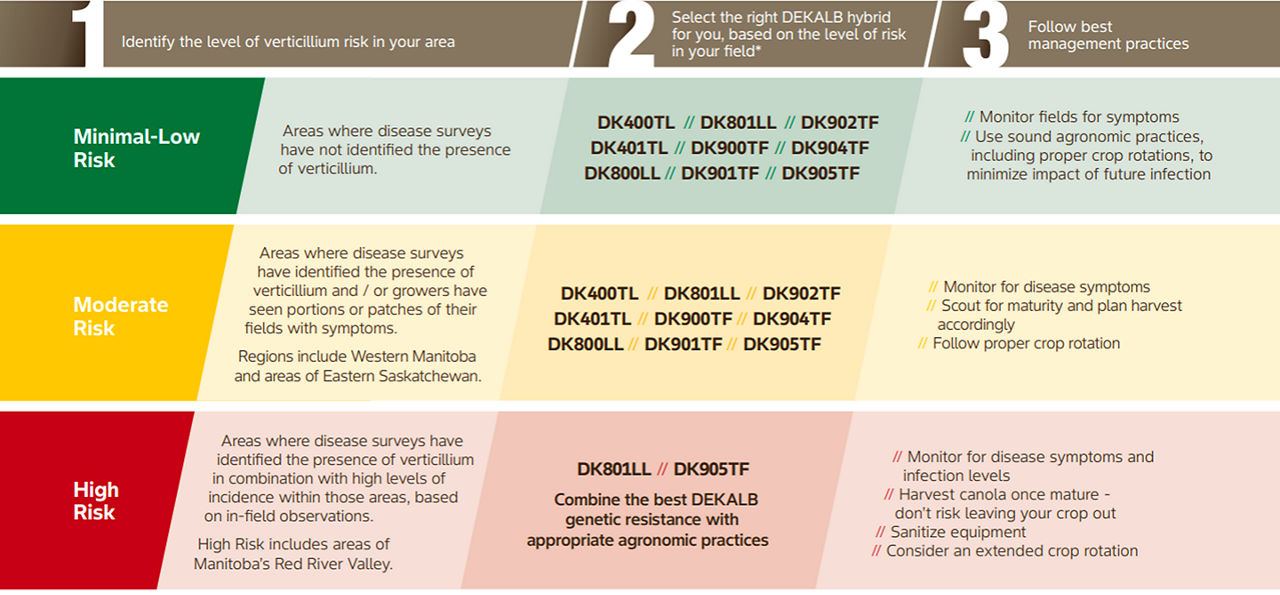
The good news is that you can continue to successfully grow DEKALB® canola in all risk areas. The key is to first understand your potential risk to verticillium in your field – refer to the Verticillium Stripe Action Plan chart. Check out the most common questions being asked about Verticillium Stripe below:
)
Manage Verticillium Stripe
Verticillium stripe is appearing across the Prairies. The right hybrid can help manage risk, protect yield potential, and support stronger field performance.
Frequently Asked Questions
How does Bayer assess verticillium resistance in DEKALB canola hybrids?
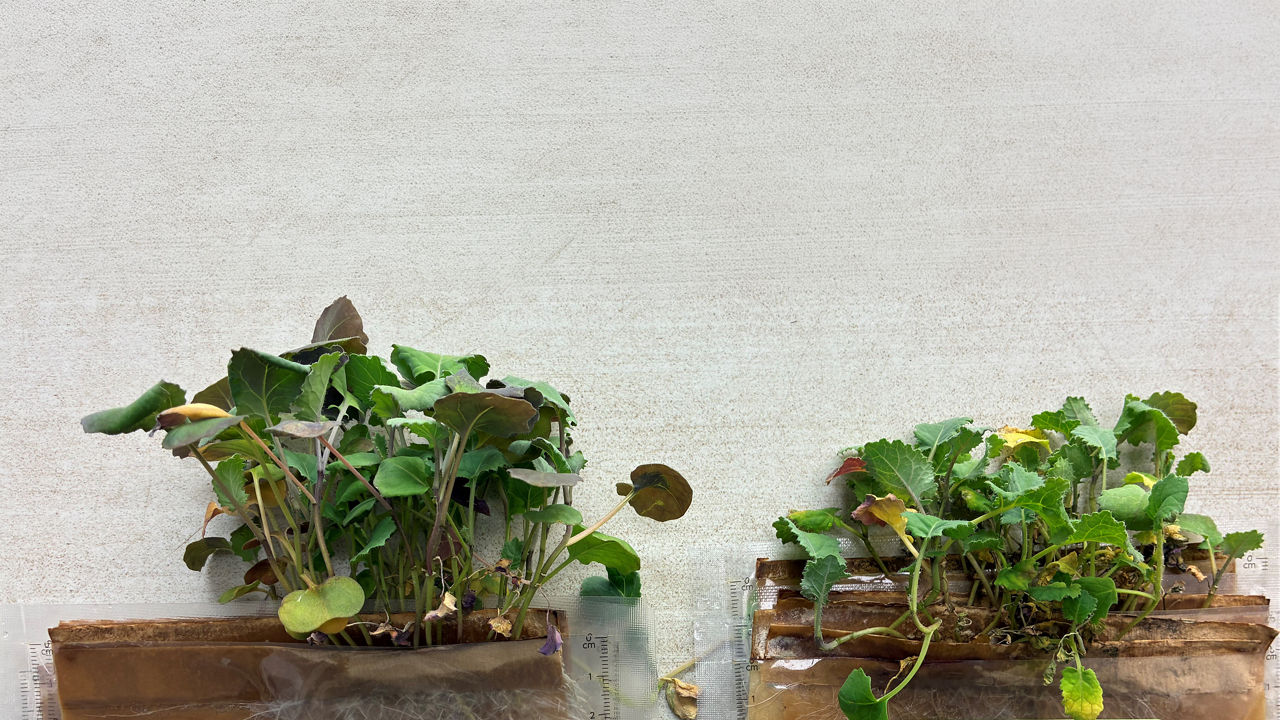
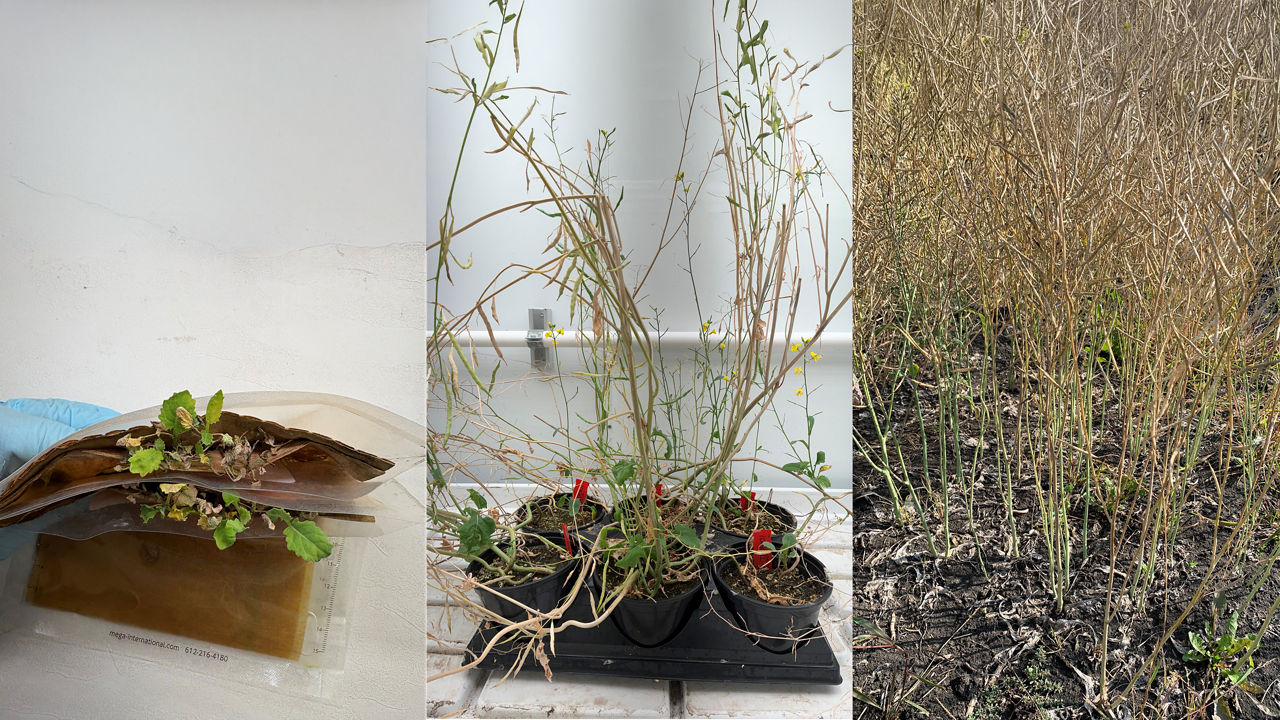
All our hybrids are assessed using 3 separate disease screening protocols that include controlled environment (indoor) testing for both seedling and adult plant resistance, as well as 2 years of field disease nursery screening to ensure we provide the most comprehensive characterization of verticillium stripe resistance in the industry.
How does Bayer’s verticillium rating scale differ from other manufacturers?
Each canola manufacturer uses a different verticillium stripe rating scale to evaluate and rank their hybrids. The limit to some is they provide little to no context on how their hybrids will perform in areas of high risk/pressure. Bayer has instead taken the approach to understand the performance of DEKALB hybrids using industry-leading techniques and provide growers with a recommendation based on their individual risk. Since all canola hybrids in the market can be impacted by verticillium, it’s important to not only select the best hybrid based on risk, but to also follow strong agronomic practices to minimize yield losses and the impact of the disease.
If I really like the performance of a DEKALB hybrid and it’s not listed in my risk zone, can I still grow it?
Yes, you can, if good agronomic practices are followed. Regardless of DEKALB hybrid choice, growers in high-risk areas will see some impact from verticillium even in hybrids with the best resistance available. Managing the impact of the disease depends on proactive management and agronomic choices. If you have a DEKALB hybrid that performs well for you and is the best fit for your operation, you can continue to grow it if you take proactive scouting and management recommendations set forth in the Verticillium Action Plan. Growers may experience earlier onset symptoms and a higher risk of lodging so having a plan to prioritize harvest (either swathing or harvesting as soon as the crop reaches 10% moisture) will provide growers with the best opportunity for success.
When should I scout for verticillium?
Bayer has created a Verticillium Action Plan chart to help growers scout, assess and manage their crop, based on the presence of verticillium throughout the year. During the growing season, the first opportunity to scout is the late flowering stage, typically mid‑ to late July, depending on planting date. Growers should cut stems close to the soil, where verticillium–infected plants often show dark ring‑like discoloration in stem cross‑sections and grey discoloration at the stem base cross‑section.
How do early season environmental conditions impact the incidence/severity of the disease?
Verticillium infects canola plants from the seedling to early flowering stages. Verticillium infection is aided by warm, moist soils at emergence and early plant growth, as this can lead to increased levels of infection. Dry soils at planting can delay or hinder the early infection of verticillium, but given the wide window of potential infection, the crop can still be infected at high levels at later stages. There are some indications that later infection will delay the full impact of the disease later in the season, resulting in less yield loss. That said, infected plants can still undergo premature plant death, resulting in yield losses.
Other than hybrid choice, what else can I do to manage my risk of verticillium?
Verticillium is a soil borne disease which makes in-field management difficult. In addition to hybrid selection, disease management practices, such as crop rotation, disease scouting, effective weed control, improving overall plant health, equipment sanitation under high disease risk, and appropriate harvest and stubble management, can all contribute to reducing the risk of verticillium.
What is Bayer doing from a breeding standpoint to support grower’s battling verticillium?
Bayer is addressing verticillium through an integrated breeding and research program. This includes large-scale field and controlled environment screening, adding resistance traits into genomic selection models and identifying new resistance sources. In fact, Bayer has collected and isolated over 1,000 field isolates and identified the most aggressive strains for screening hybrid resistance. By testing our current products and pipeline against these highly virulent isolates, we have confidence in our hybrid ratings and characterization.
How does Bayer recommend growers assess verticillium in their field and differentiating it from “normal” plant drydown?
Verticillium stripe can cause premature plant death, so correctly separating it from normal drydown is essential to avoid overestimating disease risk (especially in DEKALB hybrids which are bred for natural, whole plant drydown). To assess it accurately, growers should: scout early by cutting stems slightly above the soil during the late flowering stage to check for vascular browning/infection; watch for patchy areas of premature drydown (and consider harvesting earlier to reduce lodging losses); look for stem shredding (vs. intact stems in normal drydown); and avoid confusing late-season saprophytic fungi with verticillium. If straight cutting, combine as soon as seed reaches ~10% moisture, to minimize potential losses due to stem degradation and lodging. Choosing a hybrid with whole plant drydown vs. a hybrid which has stems that stay green will allow for a more timely and efficient harvest.
What should I do if I identify verticillium in my field?
A series of steps can be taken to help manage the disease, but first, it’s important to look at both its prevalence (how widespread) and its impact (plant integrity and yield). We recommend following a series of best management practices throughout the season. See our DEKALB rating scale and Action Plan for more.
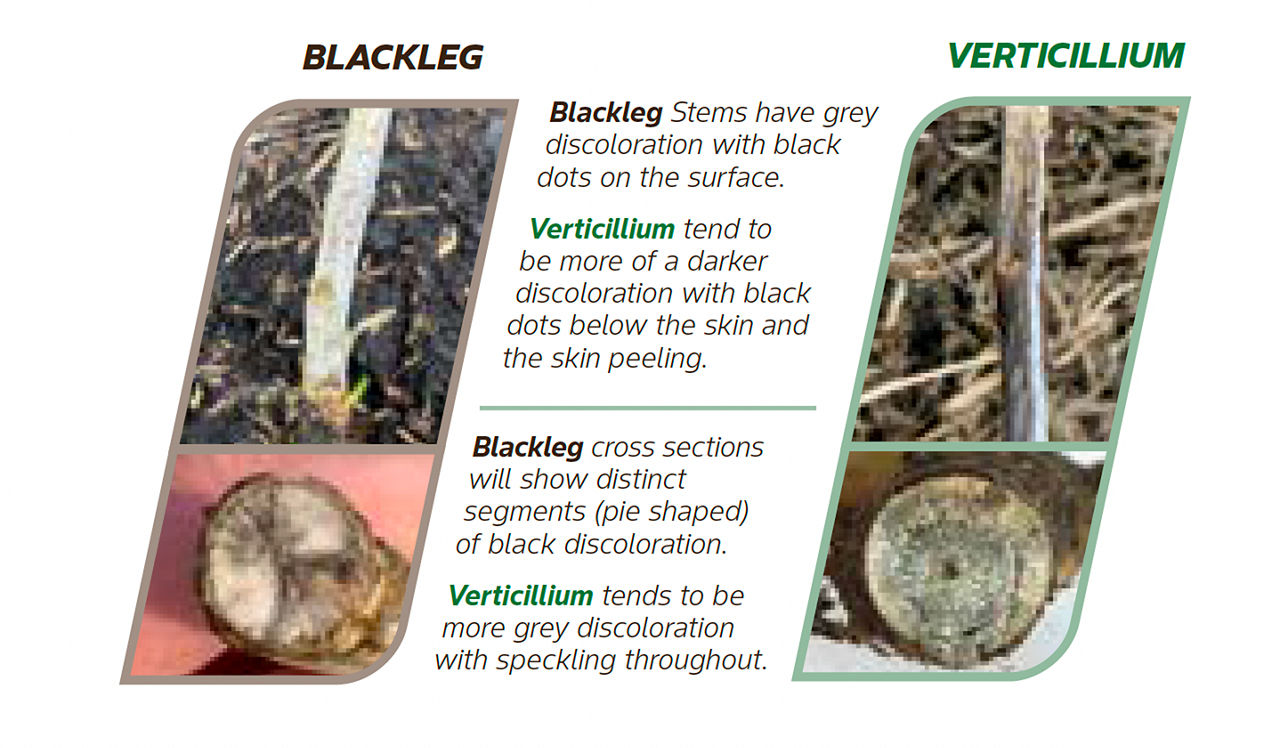
How can you distinguish between verticillium stripe and blackleg?
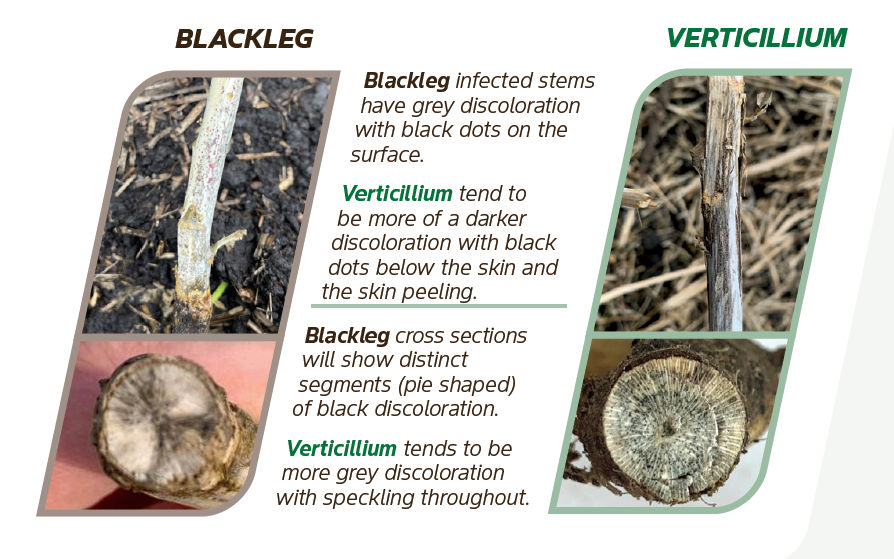
Verticillium stripe can be distinguished from blackleg at later growth stages by looking for differences in stem discoloration and cross sections, especially the presence and distribution of microsclerotia and stem shredding. In general, verticillium shows partial grey/brown discoloration with pepper-like microsclerotia (and often shredding), while blackleg usually causes uniform dark discoloration and pycnidia on stem lesions.