A tractor sprays herbicide across a green crop field bordered by dense trees under a partly cloudy sky.
Spray Smarter, Know Your Options

Roundup Agricultural Herbicides


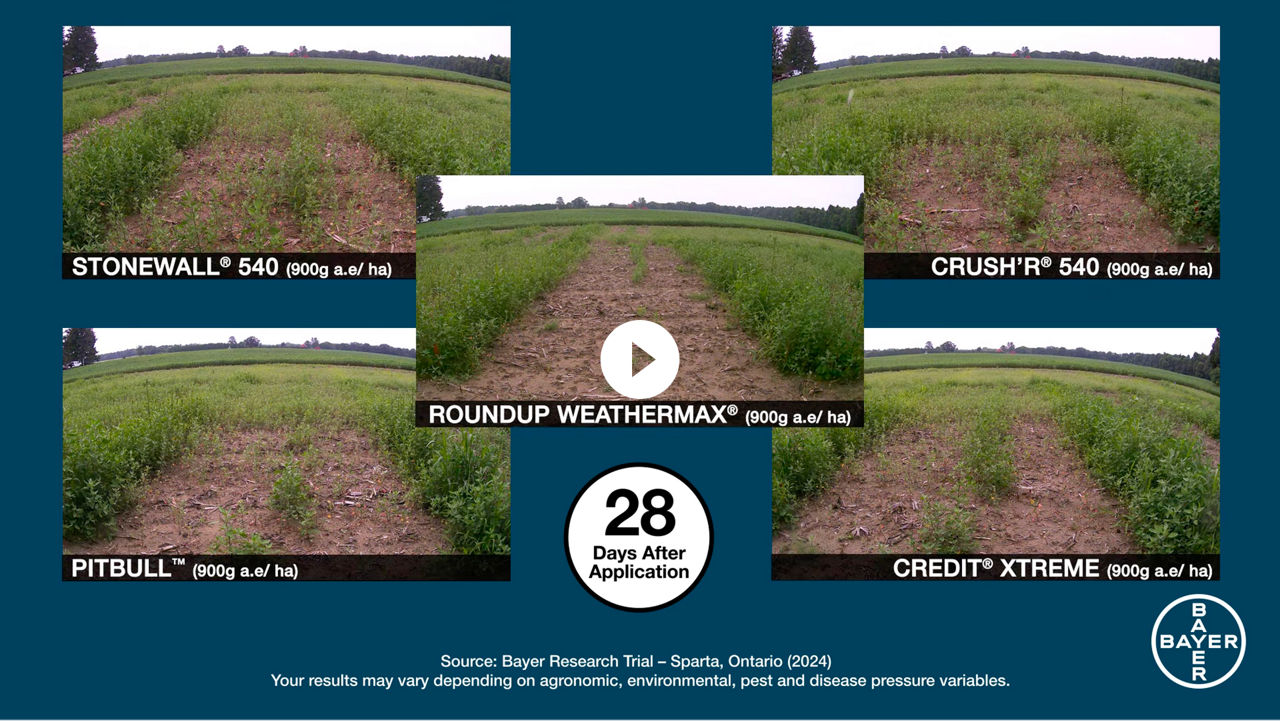
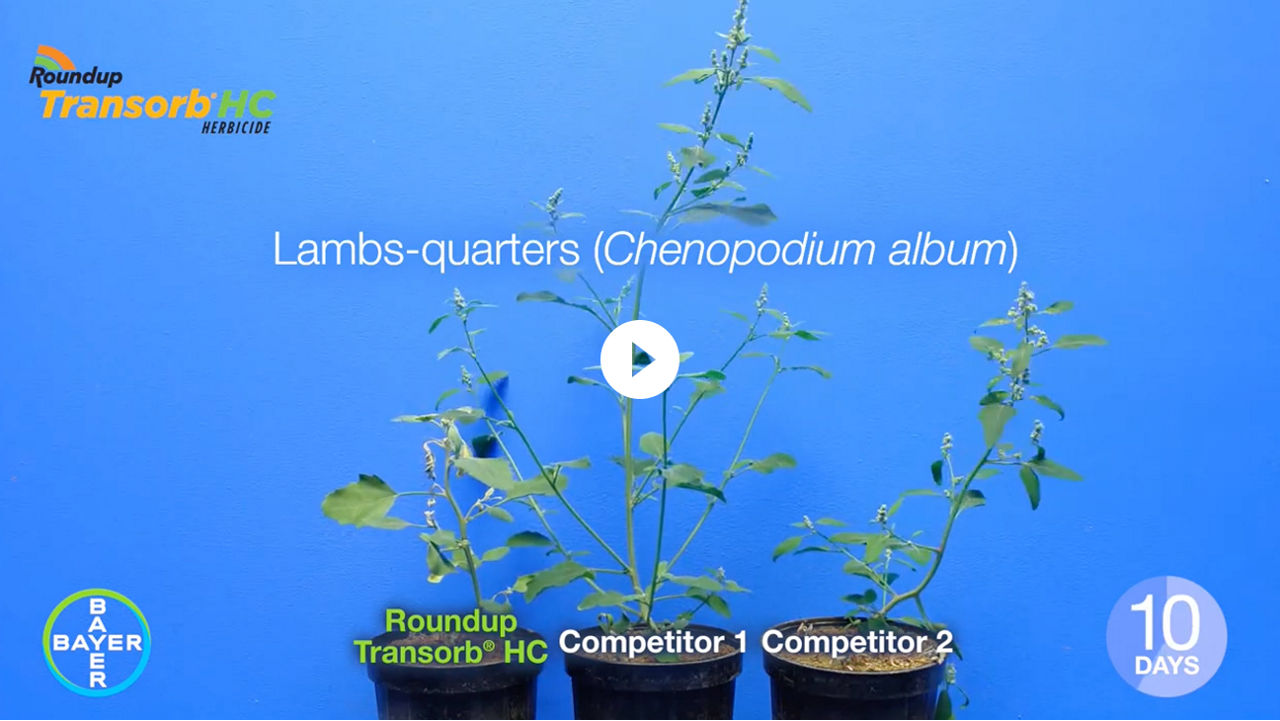
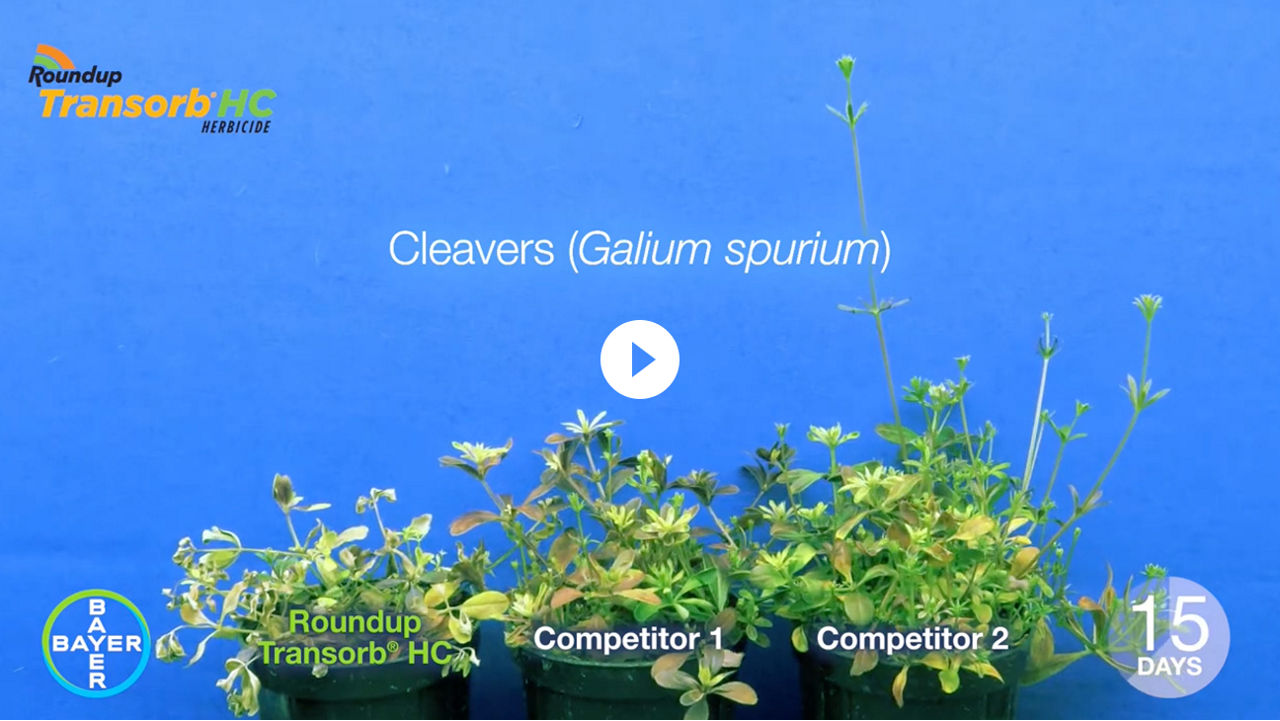
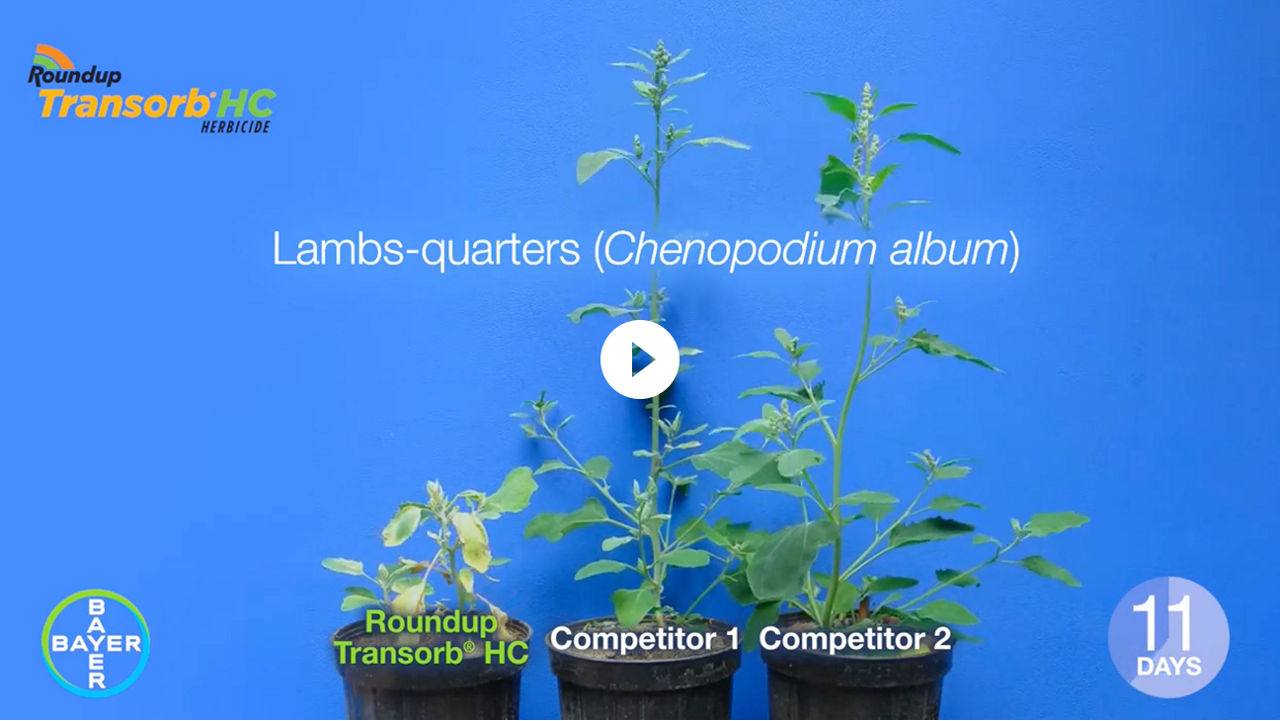
Roundup WeatherMAX® with Transorb® 2 Technology and Roundup Transorb® HC herbicides provide convenient, easy-to-use broad spectrum weed control even in tough conditions. Roundup® agricultural herbicides come with some of the best guarantees in the industry, backed by years of top-tier research and development.

Roundup Logo

Why you should choose Roundup

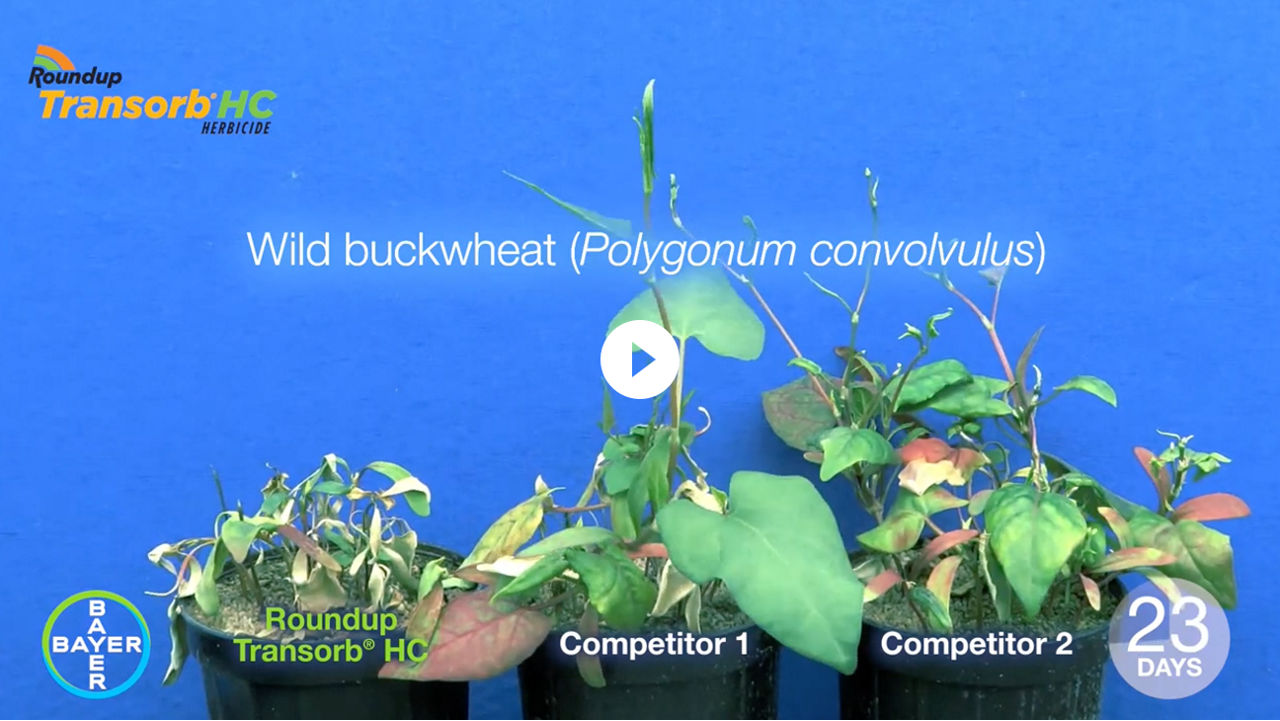
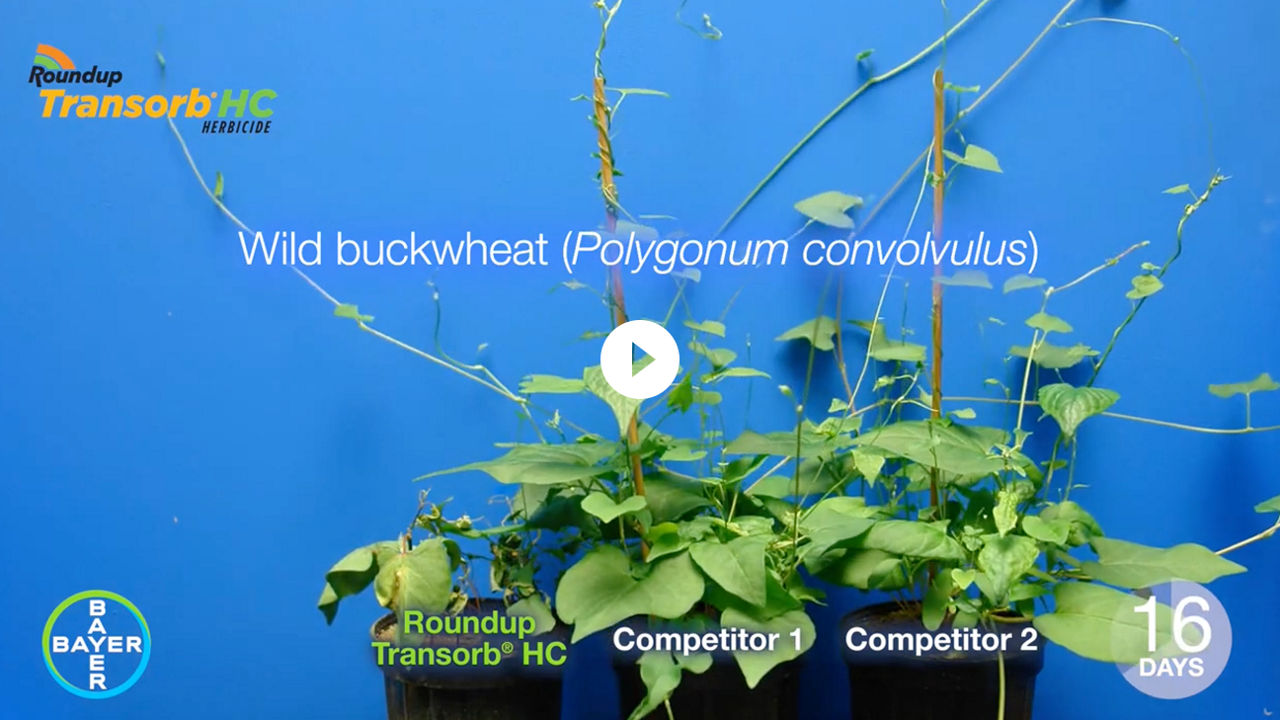
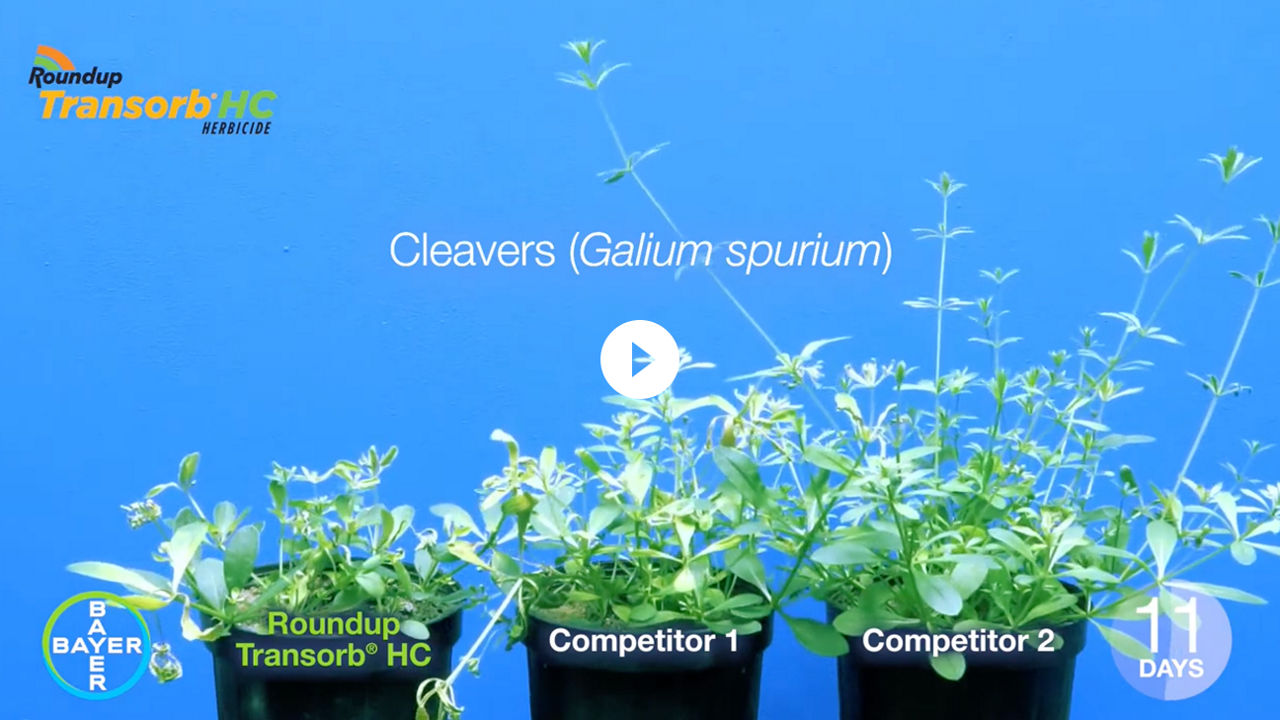
With six decades of development and innovation behind them, Roundup agricultural herbicides are tried, tested and best of all – GUARANTEED*. See how Roundup technology works – even on the toughest weeds.

Container of Roundup Transorb HC herbicide with green and orange label shown against a background with matching curved shapes.

Roundup WeatherMAX

Roundup WeatherMAX herbicide is the preferred product for customers who want guaranteed* performance in a range of weather conditions.

Roundup WeatherMAX offers:

  • Outstanding and consistent weed control under ideal and tough conditions
  • Unsurpassed and consistent weed control under ideal and tough conditions
  • 30-Minute Rainfast Guarantee
  • All Weather Warranty
  • Supported by Riskshield® Protection Package
VIEW PRODUCT

Roundup WeatherMax Logo
Roundup Transorb HC

Roundup Transorb HC herbicide sets the standard in value, combining quality, performance and support at a lower cost to growers.

Roundup Transorb HC offers:

  • Outstanding and consistent weed control
  • Trusted performance
  • 60-Minute Rainfast Guarantee
  • All Weather Warranty
  • Supported by Riskshield® Protection Package
VIEW PRODUCT

Roundup Transorb HC Logo
*Get peace-of-mind with the RiskShield Protection Package*
  Roundup WeatherMAX Roundup Transorb HC
Rainfast Guarantee 30 - Minute 60 - Minute
Service Plan Yes Yes
Crop Safety Guarantee Yes Yes
All Weather Warranty Yes Yes

Bayer Crop Science offers one of the most comprehensive service and warranty performance packages on the market for glyphosate products. Roundup WeatherMAX® and Roundup Transorb® HC herbicides come with unique and comprehensive guarantees for growers seeking assured performance.
30-Minute Rainfast Guarantee

If Roundup WeatherMAX fails to provide acceptable weed control due to rainfall 30 minutes or more after application, Bayer will replace up to the initial rate for re-treatment (640 acre maximum).

60-Minute Rainfast Guarantee

If Roundup Transorb HC fails to provide acceptable weed control due to rainfall 60 minutes or more after application, Bayer will replace up to the initial rate for re-treatment (640 acre maximum).

Crop Safety Guarantee

Compatibility of Roundup Ready® crops is an integral part of the Roundup WeatherMAX and Roundup Transorb HC formulations. Bayer guarantees crop safety on over-the-top applications of these herbicides on plants containing Bayer licensed Roundup Ready® technology (640 acre maximum).

All Weather Warranty

If producers are forced to spray Roundup WeatherMAX or Roundup Transorb HC, even in tough conditions, and acceptable weed control is not obtained, Bayer will refund or credit up to the initial use rate of Roundup WeatherMAX or Roundup Transorb HC for re-treatment (640 acre maximum).

*Further terms and conditions apply. For further information, call Bayer Technical Support:

1 888-283-6847

The Roundup Advantage

When it comes to broad spectrum weed control that's convenient to use, Roundup WeatherMAX or Roundup Transorb HC herbicides provide outstanding performance even in tough conditions. That’s the difference technology makes.


In addition to providing lower application rates and higher acid equivalent (A.E.), Roundup glyphosate-only agricultural herbicides offer different formulations to suit the specific needs of your farming operation.

Farmer standing on a large green sprayer tractor preparing equipment in an open agricultural field.

The History of Roundup Agricultural Herbicide

The story starts some 60 years ago, with ongoing innovation and development ever since.
    Roundup Logo

    1960

    In 1960, an Agricultural Division is formed within Monsanto. In the mid- 1960s, Monsanto established Monsanto Agricultural Centers, or MACs. They were retail operations, something new to Monsanto, and provided all the fertilizer and pesticides a farmer might need, including testing and provided fertilizer and herbicide solutions farmers needed including testing and product application to fields in some cases. MACs were phased out in 1975.

    --

    1970

    A young chemist named John Franz, who had recently been transferred to the Ag division, began work with another scientist, Dr. Phil Hamm, the head of Monsanto's herbicide screening program. Hamm was excited about two phosphonic acid compounds that had been recently submitted by chemists from another part of Monsanto, compounds that initially were studied as water softeners but showed mild herbicidal activity. Hamm wondered if there might be some use for the compounds as herbicides and asked Franz to study them.

    Franz continued to create derivatives of these phosphonic compounds, examining how they metabolized in plants. He hypothesized that the actual active ingredient was a compound produced in the metabolism process. He began to synthesize some of those compounds. The third compound he synthesized showed great promise on grassy weeds like Johnson grass and quack grass. This compound would prove to be one that would change the face of farming, a molecule named glyphosate.

    --

    1972-1973

    In the early 1970s when glyphosate was first discovered, Monsanto marketers were perplexed. They were accustomed to selling herbicides that were selective, which controlled certain weeds but left crops unharmed. Glyphosate was non-selective that affects a wide range of plants it encounters. But because of its environmental profile, many saw the potential for farmers to use it in ways to benefit both their crops and the ecosystem.

    --

    1974

    Original Roundup brand herbicide commercialized in Malaysia and the UK.

    Roundup Logo

    1976

    Original Roundup brand herbicide commercialized for agriculture use in Canada.

    This innovative herbicide empowered farmers to effectively eliminate nearly all weeds that sprouted from the soil, reducing the need for tilling and helping to prevent soil erosion. From an environmental fate perspective, Roundup agricultural herbicides broke down into natural substances - carbon dioxide, phosphoric acid, and ammonia. In terms of environmental impact, the original Roundup agricultural herbicide stood out as one of the safest herbicides ever developed.

    --

    Late 1970s

    In 1970, most farmers believed they had no choice but to use herbicides and tilling to control weeds. At the time, most herbicides were pre-emergent, meaning they created a chemical barrier on the surface of a field and killed weeds when they sprouted through this barrier and came in contact with the herbicide.

    To be effective, pre-emergent herbicides had to spread evenly when applied to fields, ensuring a consistent barrier against sprouting weeds. They also needed to stay active for a long time so they would continue to be effective after the spring rainy season.

    These two common traits were environmentally problematic because active pre-emergent herbicides could wash into streams and groundwater, potentially affecting wildlife and fish.

    Roundup herbicides were different and possessed one of the most benign environmental profiles in the history of modern agriculture.

    --

    1980s

    Starting in the early 1980s, Monsanto began to invest heavily in a new science called biotechnology. The company built new labs, hired new scientists, performed year upon year of research and spent billions of dollars chasing a dream.

    --

    1994

    Original Roundup brand herbicide named by Farm Chemicals Magazine as one of the “Top Ten Products that Changed the Face of Agriculture.” The broad-spectrum control and ease of use of Roundup brand herbicides was a game changer that also helped to enable the adoption of no-till and reduced-till practices, reduced the risk of soil erosion, plus improved on-farm efficiency.

    --

    1996

    Roundup Ready Canola is introduced in Canada. This technology changed the face of Western Canadian agriculture and was a catalyst in the success of the Canadian canola industry. This was the beginning of the adoption of several glyphosate resistant crops with higher yield potential.

    --

    1997

    Roundup Ready Soybeans are introduced in Canada, providing farmers with in-seed herbicide tolerance to Roundup and other glyphosate-based herbicides.

    Roundup Logo

    2004

    Roundup WeatherMAX and Roundup Transorb HC are introduced for sale in Canada.

    Dr. John Franz is introduced into the National Inventor’s Hall of Fame for

    his invention of glyphosate.

    --

    2008

    Corn hybrids with Roundup Ready 2 Technology® introduced in Canada delivering flexibility, broad-spectrum weed control, proven crop safety and cutting-edge agronomics.

    --

    2016

    Roundup Ready 2 Xtend® soybeans are introduced in Canada as part of the Roundup Ready® Xtend Crop System with improved yield potential and control of tough-to-manage weeds like Canada fleabane, waterhemp, kochia and more.

    --

    2018

    Bayer Crop Science acquires Monsanto and Roundup brand herbicides. Bayer Crop Science continues to focus on optimizing the Roundup agricultural herbicide formulation for Canadian farms.

    --

    2019

    Bayer Crop Science introduces TruFlex® canola with Roundup Ready® Technology, a revolution in canola production.

    --

    2020

    TruFlex® LibertyLink® canola is introduced in Canada. This innovative canola trait combination gives you the weed control benefits offered by Roundup® and Liberty® branded herbicides – including the exceptional control of kochia, wild oats, cleavers and waterhemp – while acting as an effective tool to manage and delay herbicide-resistant weeds

    --

    2021

    XtendFlex® soybeans are introduced in Canada as part of the Roundup Ready Xtend Crop System enabling the option to use glufosinate.

    --

    2026

    50th anniversary of Roundup agricultural herbicides available for use in Canada

Roundup Logo

MyBayer

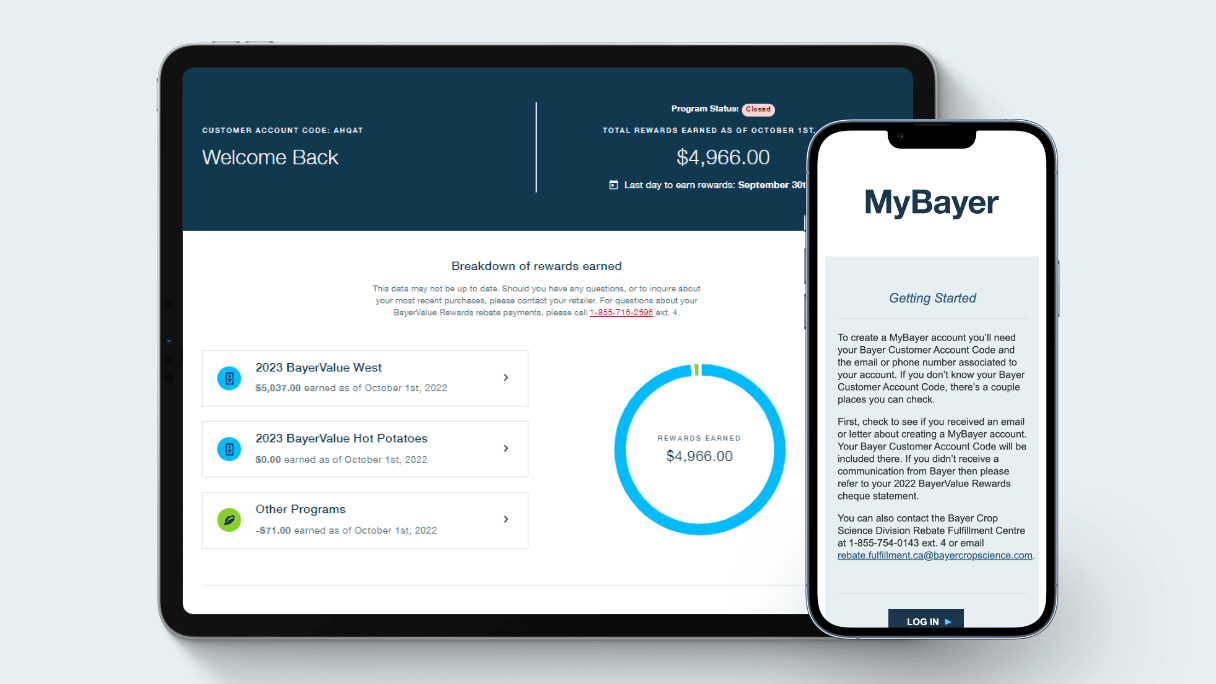
Log in to your account to see your BayerValue™ Rewards details, past purchases, and more.
launchLog In
article image